



Dark web monitoring services scan hidden forums and marketplaces for stolen personal data like passwords and emails, alerting users when their information surfaces so they can take protective action before criminals exploit it. Services like Cloaked provide real-time alerts and can remove personal info from 120+ data brokers, significantly reducing your digital exposure and the time criminals have to misuse your data.
TLDR
- Dark web monitoring cuts breach discovery time from an average of 194 days to minutes through automated scanning of hidden forums and marketplaces
- The average data breach costs organizations $4.88 million in 2025, with breaches contained quickly costing $1 million less than prolonged incidents
- Nearly 15 billion accounts have been exposed in breaches since 2004, with 91% of organizations experiencing identity-related incidents in 2024
- Real-time monitoring alerts enable immediate password changes and account closures before stolen data spreads
- Combining monitoring with data broker removal and virtual identities creates multiple layers of protection against identity theft
Every day, millions of stolen credentials go up for sale on hidden forums most people never see. If your email, password, or phone number lands in one of these marketplaces, criminals can exploit it long before you realize anything is wrong. Dark web monitoring offers a way to flag these exposures quickly, giving you a chance to act before the damage spreads.
Dark web monitoring is a security service that continuously scans hidden websites, forums, and marketplaces for references to your personal data, such as leaked passwords, emails, or financial details. By alerting you the moment your information surfaces in these risky corners of the internet, it helps you shrink your personal data footprint and limit the ways criminals can use your identity against you.
Why Does Your Personal Data End Up on the Dark Web?
The internet is layered. Most of us browse the "surface web," which search engines index and anyone can access. Below that sits the deep web, which includes password-protected pages like online banking or medical portals. The final layer is the dark web, which requires specialist router technology to access and is often a hub for illegal activity.
Your personal data footprint is the sum of all the information about you that exists online. This includes obvious details like your name and email, but also less visible data such as past addresses, employment history, and login credentials from old accounts. Each piece adds to your exposure.
Data ends up on the dark web through several common paths:
- Data breaches: Hackers steal databases from companies you have accounts with, then sell or leak the records.
- Phishing attacks: Criminals trick you into handing over credentials, which are then bundled and traded.
- Infostealer malware: Malicious software harvests passwords, cookies, and other sensitive data directly from infected devices.
- Data brokers: Third parties collect and sell your information, sometimes without your knowledge, making it easier for bad actors to piece together your identity.
Dark web monitoring tools scan hidden websites, forums, and marketplaces for stolen data like leaked passwords, personal records, or company information. When your data is found, you receive an alert, allowing you to change passwords, close accounts, or take other protective steps before criminals can act.
Cloaked provides real-time alerts for dark web exposures, helping you monitor and respond to threats as soon as they appear.
.avif)
What Does an Oversized Data Footprint Cost You?
The more personal information floating around online, the greater your risk. The consequences of a large data footprint are not just theoretical; they come with real financial, emotional, and time costs.
Beyond money, victims often spend significant time resolving issues. In 2023, the average time spent on fraud resolution jumped to nearly 10 hours, up from six hours the year before, according to Javelin Strategy & Research.
Key takeaway: An oversized data footprint exposes you to higher financial losses, more frequent fraud attempts, and hours of recovery time.
Data brokers: the silent amplifiers
Data brokers are companies that collect and sell personal information, including names, addresses, phone numbers, emails, and employment details, often without consent. They operate as silent amplifiers of your data footprint, making it easier for criminals to piece together your identity.
- Data broker removal involves identifying and eliminating info from third-party data broker websites.
- Since 2004, nearly 15 billion accounts have been exposed in breaches, including 3 billion U.S. accounts.
- Privacy law often places the burden of managing personal data on victims, a phenomenon described as "brokered abuse." As one legal analysis puts it, "no number of name changes and relocations can prevent data brokers from sharing a victim's personal information online."
Data brokers feed the dark web supply chain. Information harvested by brokers can end up in criminal hands, fueling phishing, impersonation, and social engineering attacks.
How Does Dark Web Monitoring Work Behind the Scenes?
Dark web monitoring tools use a combination of techniques to identify threats lurking in hidden corners of the internet. These include:
- Keyword analysis: Scanning for mentions of your email, name, or company.
- Crawling dark web forums: Automated bots navigate forums and marketplaces to spot stolen data.
- Scanning for suspicious IP addresses: Identifying where leaked data is being traded.
- Threat intelligence feeds: Aggregating data from multiple sources to provide real-time alerts.
Services that use machine learning and automation can proactively scan dark websites for any malicious activities related to your personal or business data. This means security teams stay a step ahead of criminal activity and can tackle issues before they escalate.
Dark web monitoring acts like an early warning radar. Instead of waiting months to discover a breach, you get a heads-up the moment your data leaks, according to DeepStrike.
From 194 days to minutes: shrinking discovery time
Without monitoring, organizations take an average of 194 days to identify a breach, according to DeepStrike. That is more than six months of exposure, during which criminals can exploit stolen data repeatedly.
- Breaches contained in under 200 days cost $1 million less than those that drag on.
- Real-time alerts, like those offered by Cloaked, can shrink discovery time from months to minutes.
- Faster detection means you can rotate credentials, close accounts, and trigger data broker removals before your information spreads further.
Cloaked delivers real-time alerts for dark web exposures, helping users respond the moment their data is spotted.
Evaluating Dark Web Monitoring Tools (and Where Cloaked Fits)
Not all dark web monitoring tools are created equal. Here is how the main categories compare:
In 2023, a wide range of cross-sector businesses ranked dark web intelligence tools as their most effective fraud, identity, and authentication methods, according to Javelin Strategy.
AI is increasingly used to enhance threat intelligence but is also a source of new threats. As one industry report notes, "AI-generated attacks will become more complex and lower the barrier for new threat actors."
Cloaked's privacy-first edge
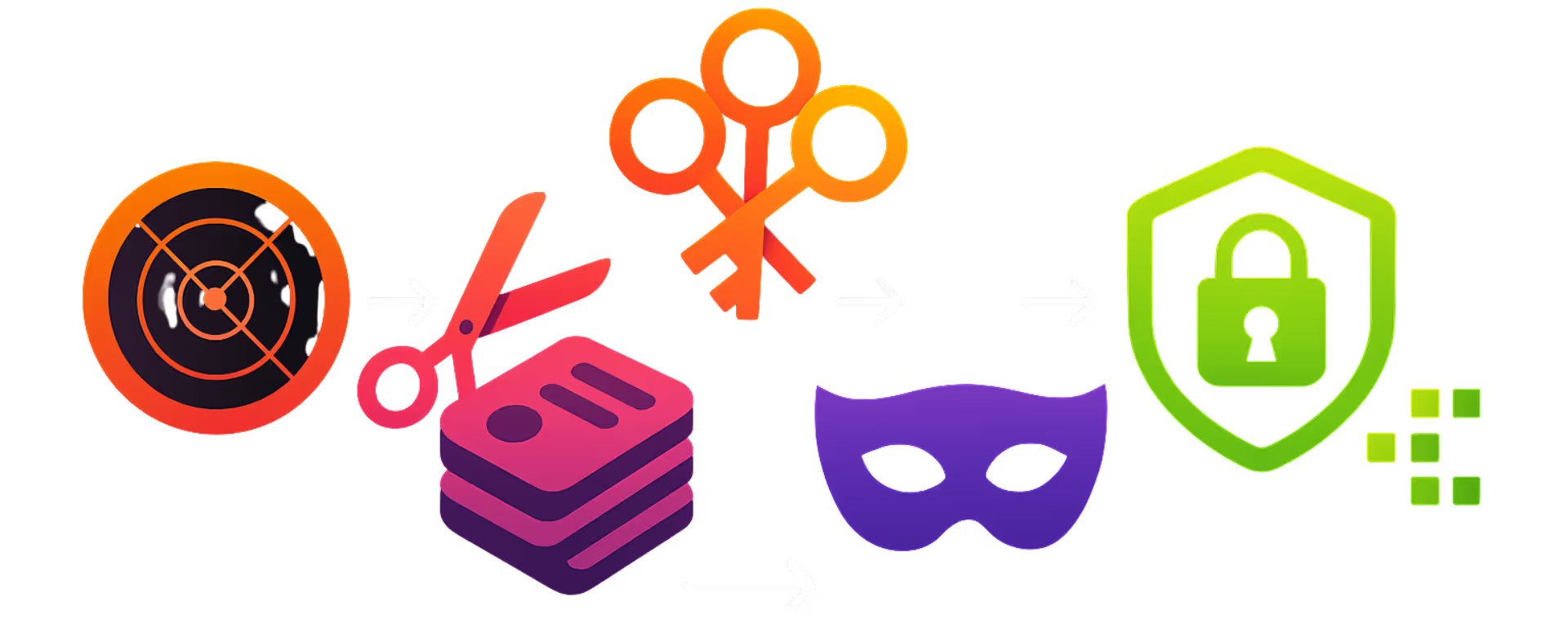
Cloaked stands apart by combining dark web monitoring with a broader privacy toolkit. Here is what sets it apart:
- AutoCloak AI (coming soon): This feature will allow users to replace vulnerable personal information with anonymous Cloaked information, creating a dead-end for marketers and criminals alike. As Cloaked describes it, AutoCloak AI "puts the power back into your identities by replacing your vulnerable personal information with anonymous Cloaked information."
- Virtual identities: Cloaked enables users to create virtual identities, which act as a buffer between their real identity and the digital world.
- Data broker removal: Cloaked can remove personal info from 120+ data brokers, shrinking your data footprint at the source.
- Real-time monitoring: Alerts are delivered as soon as exposures are detected, not days or weeks later.
Cloaked's approach is proactive, not just reactive. By replacing real credentials with secure aliases and monitoring for leaks, users reduce both the likelihood and impact of future exposures.
Which Best Practices Shrink Your Digital Footprint Fast?
Reducing your personal data footprint is not a one-time task. It requires ongoing attention to both monitoring and prevention. Here is a checklist of actionable steps:
1. Enable dark web monitoring: Use a service that scans for your credentials and alerts you to exposures.
2. Request data broker removal: Services like Cloaked can remove personal info from over 120 data brokers, cutting off a major source of leaks.
3. Use unique passwords for every account: Nearly 88% of breaches involve human error, such as weak passwords or falling for phishing.
4. Replace old logins with secure aliases: Tools like Cloaked let you swap out real emails and phone numbers for generated alternatives.
5. Enable two-factor authentication: This adds a second layer of defense even if credentials are stolen.
6. Audit and close unused accounts: Every dormant account is a potential entry point for attackers.
7. Stay informed: In 2024, criminal use of infostealer malware at least doubled, reaching unprecedented levels. Knowing the latest threats helps you stay ahead.
Key takeaway: Combining monitoring, broker removal, and strong security hygiene is the fastest way to shrink your digital footprint.
Taking Control of Your Data Starts with Visibility
You cannot protect what you cannot see. Dark web monitoring gives you visibility into exposures you would otherwise never know about, enabling faster response and fewer opportunities for criminals.
"At Cloaked, we believe the best way to protect your personal information is to keep it private before it ever gets out."
By combining real-time monitoring, data broker removal, and privacy-first tools like unique identities and secure aliases, Cloaked offers a comprehensive approach to cutting your personal data footprint.
If you are serious about reducing your exposure and taking back control of your digital identity, Cloaked provides the tools to make it happen.

.webp)
.webp)



