



Data brokers maintain databases of personal information, selling them to marketers and background services, which increases identity theft risks and spam. Manual opt-outs fail due to hidden forms, server errors, and ignored requests, with only 35% of data removed even after months of effort. Automated services and California's upcoming DROP platform offer partial solutions, while tools like Cloaked combine removal with alias generation to prevent future data collection.
TLDR
- Manual deletion from data brokers achieves only 70% success rates after significant personal effort, with 30% of records remaining exposed
- California's DROP platform launches January 1, 2026, allowing residents to delete data from over 500 registered brokers with a single request
- Starting August 1, 2026, brokers must process requests every 45 days and delete data within 90 days
- Non-compliant brokers face fines of $200/day per consumer for failing to delete information
- Cloaked removes data from 120+ brokers while generating working aliases to prevent future data collection
If you have ever searched your own name online, you already know the sinking feeling: your home address, phone number, relatives' names, and employment history are sitting on sites you have never heard of. Data brokers collect, analyze, and sell personal information to anyone willing to pay, fueling targeted ads, robocalls, and in the worst cases, identity theft. Manually opting out of each site sounds simple until you hit timeout errors, hidden forms, and records that reappear weeks later.
This guide explains why the do-it-yourself route so often fails, what California's upcoming Delete Act and DROP platform promise, and how tools like Cloaked let you erase your data from more than 120 brokers in minutes rather than months.
Why is deleting your data from brokers so urgent—and so hard?
Data brokers maintain vast databases filled with names, addresses, phone numbers, email addresses, Social Security numbers, credit scores, income levels, and browsing history. They build detailed profiles and sell them to marketers, background-check services, and risk-mitigation firms. The global data broker market is projected to reach $561.5 billion by 2029.
Why does this matter to you?
- Identity theft risk. The FTC notes that credit freezes and fraud alerts can help, but once your data is circulating it remains vulnerable.
- Spam and scam calls. Brokers feed telemarketing lists, and global consumer sentiment shows people remain "concerned about rising prices and inflation" partly because they are bombarded with fraudulent offers.
- Lost control. You rarely gave explicit consent; brokers source data from public records, online activities, and commercial partners.
Manual removal is theoretically free, but the process is anything but simple. An investigation by The Markup and CalMatters found 35 data-broker sites hiding opt-out pages from search engines using robots meta tags. That is just one obstacle among many.
Why do manual data-broker opt-outs keep failing?
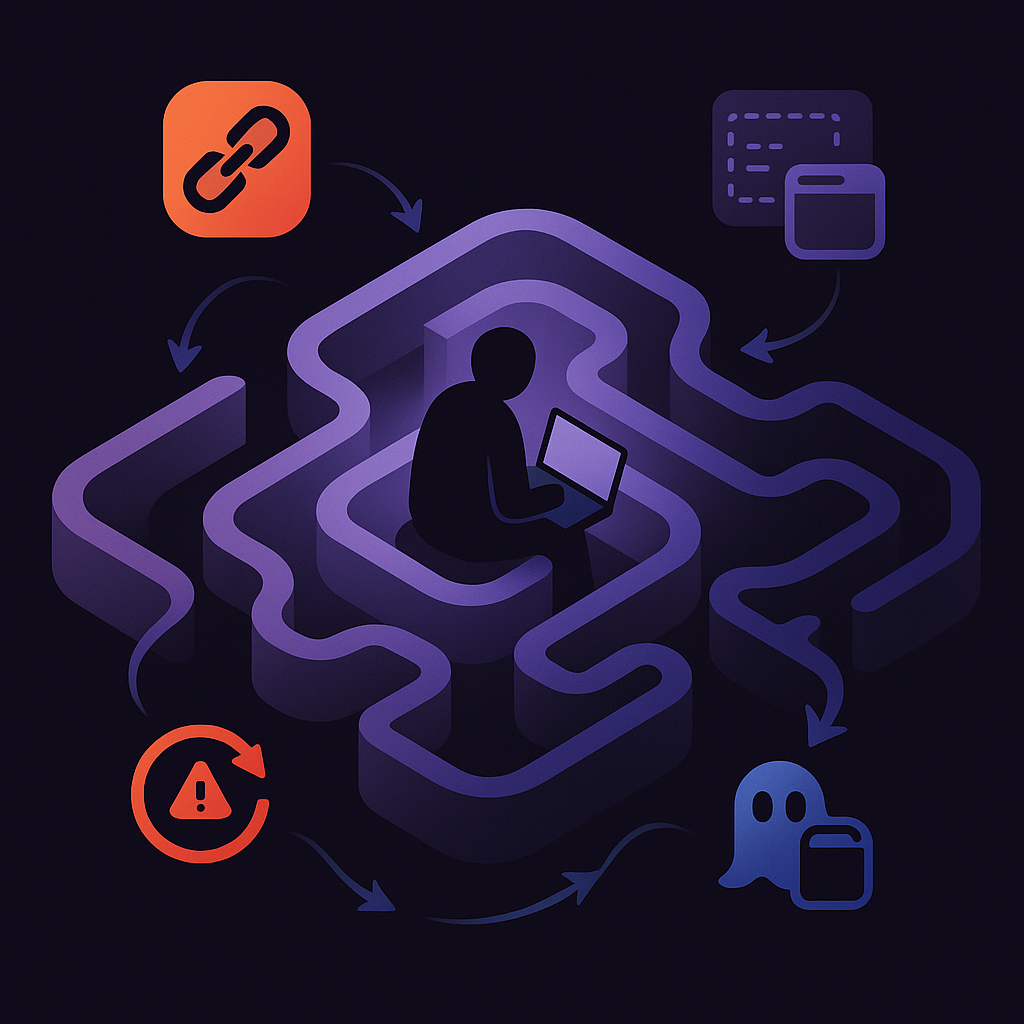
People who try the DIY approach quickly discover a maze of broken links, vanishing confirmation emails, and records that resurface.
Experian warns that "removing your information" from people-search sites "can be difficult and time consuming." Consumer Reports found that manual opt-outs reached a 70% success rate only after significant personal effort, and even then 30% of records stuck around.
Why sites crash or ignore requests
Incogni's support team explains that "even though data brokers must follow privacy laws like GDPR, PIPEDA, and CCPA, some don't remove data within the required timeframes." Compliance is patchy, and enforcement is slow.
Consumer Reports tested 32 volunteers and seven removal services. The researchers initially found 332 pieces of personal information; after four months, only 35% had been removed by the paid services.
"People-search sites are a real problem for consumers who don't want their personal information easily available to anyone with a computer." -- Yael Grauer, Consumer Reports
Key takeaway: Manual opt-outs demand hours of work, repeat monitoring, and still leave nearly a third of your records exposed.
What will California's Delete Act & DROP actually deliver?
The California Delete Act (SB 362) created the Delete Request and Opt-out Platform, known as DROP. Launching January 1, 2026, DROP lets California residents send a single deletion order to over 500 registered data brokers at no cost.
"Adoption of these regulations is a major milestone. Californians will soon be able to delete their data from hundreds of data brokers with one simple action," said Tom Kemp, Executive Director of CalPrivacy.
Key dates you should know
Fines for non-compliance are set at $200 per day for failing to register and $200 per day per consumer for failing to delete information. While promising, DROP only covers California residents and does not solve the problem for everyone else. Until enforcement tightens, many people will still need supplementary tools.
Do automated data-removal services really work?
A peer-reviewed study by researchers at Brave Software and several universities offered a sobering verdict: the measured services were unable to remove the majority of identified PII, successfully erasing only 48.2% of found records. Furthermore, just 41.1% of the records these services flagged were actually PII about the user.
Still, automation beats doing nothing. Security.org tested over 20 services across 1,000+ hours and found that Incogni has completed over 245 million removals, more than any competitor. Optery's coverage swells to over 640 sites, roughly double what Incogni tracks.
Incogni vs. Optery at a glance
Optery's visual proof of removal is a standout feature, while Incogni offers broader geographic reach and a Deloitte-audited removal process. Neither solves the core limitation: once data is deleted, brokers can reacquire it from new sources.
How Cloaked deletes your info from 120+ brokers -- and keeps it off
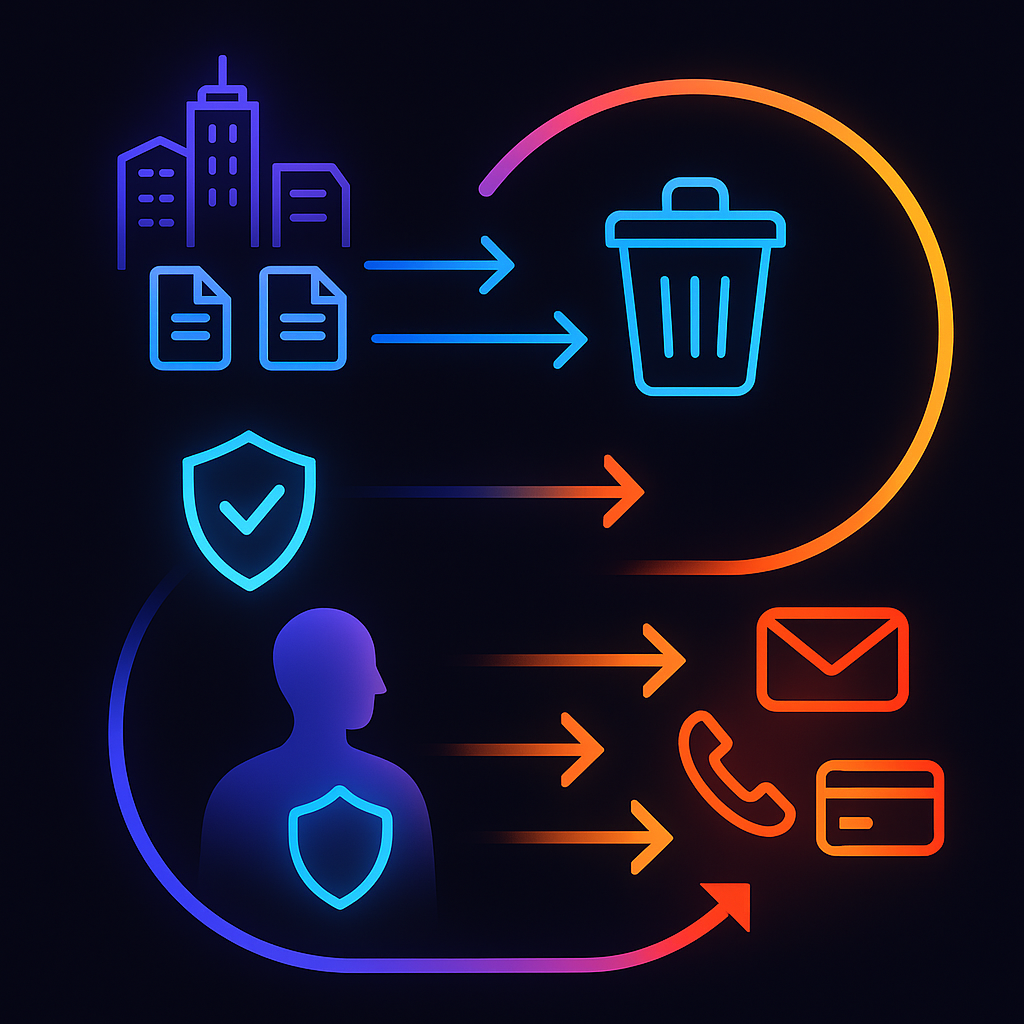
Cloaked approaches the problem from two angles: remove existing records and prevent new ones from forming.
First, Cloaked's data-removal service scans and submits deletion requests to 120+ data brokers. Progress is tracked inside a single dashboard, and the service handles follow-up requests when brokers inevitably try to relist your information.
Second, Cloaked generates working alias emails, phone numbers, and passwords so your real details never reach brokers in the first place. "Cloaked generates real working phone numbers, emails, passwords, and more to mask your genuine data."
Alias emails, virtual cards & $1M identity protection
Beyond removal, Cloaked offers:
- Virtual credit cards that shield your financial accounts during online purchases.
- Password manager to eliminate credential reuse.
- Identity theft protection providing up to $1 million in coverage.
"In May 2024, nearly ten billion passwords were shared on a hacker forum, leaving users exposed to data breaches, financial fraud, and identity theft." -- Cloaked
By combining removal with identity masking, Cloaked stops the cycle of delete-and-relist that plagues standalone services.
Get started: three steps to reclaim your privacy today
1. Run a risk scan. Cloaked offers a free assessment showing which brokers hold your data and your current risk level.
2. Automate removal. Let Cloaked submit deletion requests across 120+ sites while you track progress in one place. Experian reminds users that "you may also want to recheck the sites in the future," and Cloaked handles that ongoing monitoring.
3. Mask future data. Start using Cloaked aliases for new accounts so brokers cannot rebuild your profile. The FTC advises that credit freezes and fraud alerts help protect against identity theft; pairing those steps with alias usage adds another layer.
Takeaways: automation, regulation, and your next move
Manual opt-outs are slow, frustrating, and incomplete. California's DROP platform will help residents starting in 2026, but the rest of the country waits. Commercial services show mixed results: a Brave-backed study found they removed under half of targeted records.
Cloaked fills the gap by pairing deletion with prevention. It removes your personal info from 120+ data brokers, then replaces your real contact details with secure aliases so future leaks have nothing to grab. When your data stops circulating, you will see "less unwanted texts, calls, or emails," as CalPrivacy notes.
Privacy does not have to mean inconvenience. With the right tools, reclaiming control takes minutes, not months.

.webp)
.webp)



