




Phishing texts persist because scammers easily access personal data from broker sites to craft targeted messages. While spam filters catch only 14% of phishing attempts, removing your information from data brokers disrupts targeting at the source. The most effective defense combines automated broker removal services with alias systems that compartmentalize your real contact details.
In Summary
- Smishing campaigns send 300,000 to 400,000 texts daily, causing $330 million in losses during 2022 alone
- Reactive blocking fails because phishing URLs expire within minutes to days, before blocklists update
- Data broker removal services can reduce spam by 50% by eliminating the personal information scammers need
- Cloaked removes data from 140+ brokers while providing unlimited aliases and masked payments for $9.99/month
- Zero-trust messaging and AI detection represent the future but work best with minimized data footprints
Relentless smishing campaigns trace back to one simple truth: the more personal details attackers can look up, the more phishing texts you'll receive. Blocking spam after it arrives is like mopping a floor while the faucet runs. This post shows why the only lasting fix is to reduce your data footprint--then walks you through exactly how to do it.
Smishing Is Exploding--and Reactive Blocking Can't Keep Up
SMS phishing, commonly called smishing, has become the dominant phishing channel worldwide. The numbers paint a stark picture:
- 300,000 to 400,000 smishing texts are sent daily, according to researchers studying SMS phishing infrastructure.
- "Consumers in the US lost $330 million in 2022 to text scams, more than double the losses reported in the previous year and nearly five times the amount lost in 2019." -- UCL Smishing Research.
- The average U.S. consumer receives 13 spam calls monthly, with a median loss of $1,480 per fraud call.
The reactive approach, where carriers and spam filters catch malicious messages after they arrive, simply cannot keep pace with attackers who rotate phone numbers, shorten URLs, and shift tactics daily. If your personal information is already out there, you remain a target no matter how sophisticated your spam filter becomes.
Why Filters, Blocklists, and Carriers Fail to Stop Phishing Texts
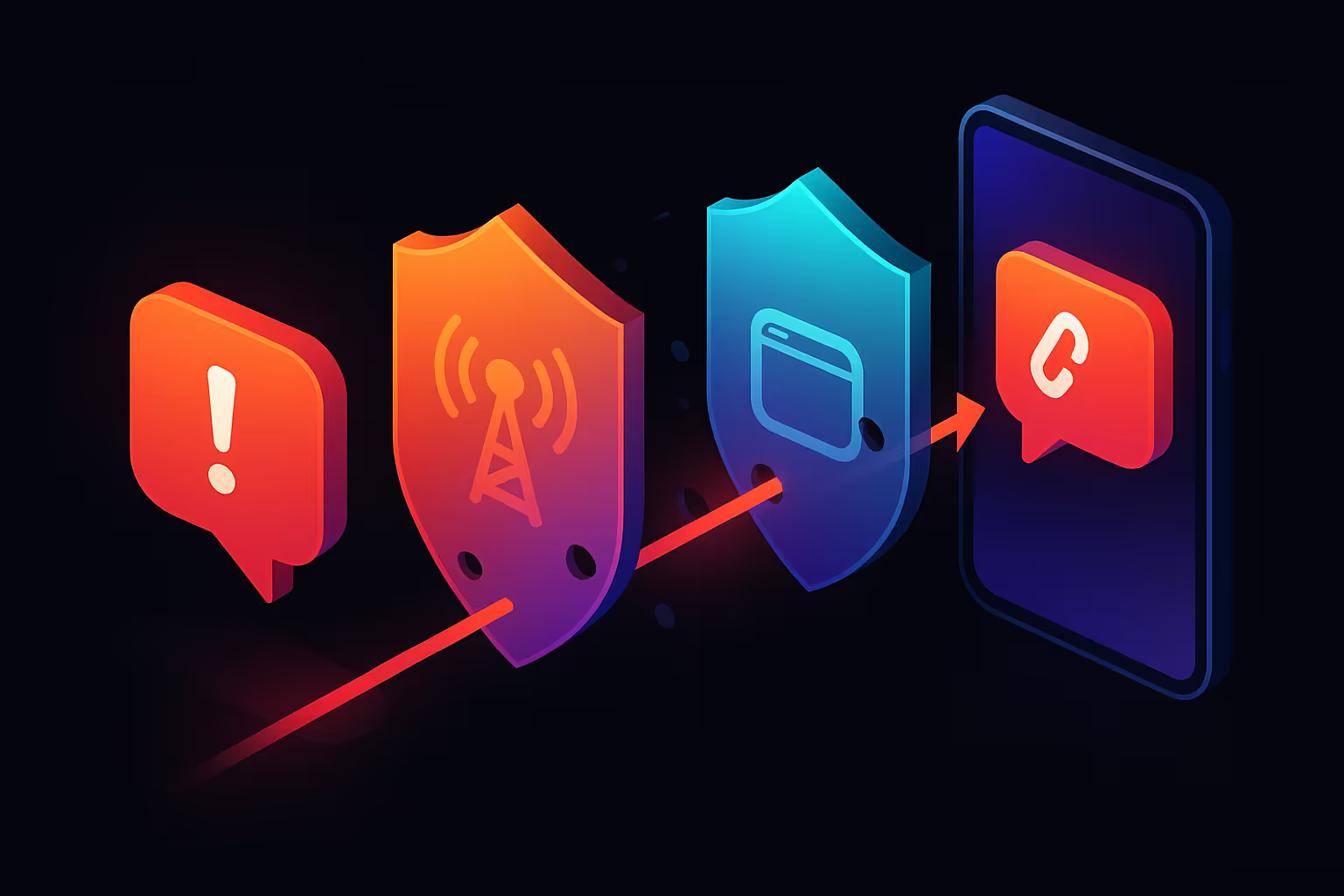
Mobile operators and industry regulators have failed to implement solutions that actually stop phishing before it reaches consumers. Here's why current defenses fall short:
MetaCert tested major U.S. carriers by sending 1,000 confirmed-malicious URLs across Verizon, AT&T, T-Mobile, and Boost Mobile. The result? A 100% delivery rate for every phishing SMS, regardless of network.
Meanwhile, FTC data show consumers lost $470 million to text-based scams in 2024. Reactive blocking cannot outrun attackers who already have your phone number and personal details.
Key takeaway: Without reducing the data that makes you targetable in the first place, you're stuck playing defense against an opponent who always moves first.
How Does a Smaller Data Footprint Disrupt Scammer Targeting?
Scammers rely on publicly available information to craft convincing messages. When your phone number, address, employer, and family connections are listed on data broker sites, attackers can personalize smishing texts to look legitimate.
Shrinking your data footprint disrupts this targeting in three ways:
1. Fewer contact points. Remove your real phone number and email from broker databases, and attackers lose their primary delivery channels.
2. Lower personalization. Without your name, location, or employer, scammers cannot tailor messages that trick you into clicking.
3. Reduced resale. Data brokers collect, aggregate, and sell personal information at unprecedented scale. Opting out limits how often your details resurface.
A regional bank CISO who implemented data removal services reported dramatic results: "I've seen my spam emails decrease by about 50%, and spam phone calls have significantly reduced as well." -- Optery Case Study
The academic literature reinforces this point. Researchers note that "no number of name changes and relocations can prevent data brokers from sharing a victim's personal information online" unless proactive removal is pursued (Brokering Safety, SSRN).
5 Practical Ways to Reduce Your Data Footprint Today
Ready to cut the data supply chain that feeds smishing? Here are five actionable steps:
1. Use a Data Broker Removal Service
Manually opting out of hundreds of brokers is overwhelming. 750 unique data broker groups operate across the U.S., each with different opt-out procedures. Services like Cloaked automate removal from 140+ high-impact brokers and monitor for re-listings.
2. Replace Real Contact Details with Aliases
Every time you hand over your phone number or email, you create another data point for brokers to harvest. Email and phone aliases let you sign up for services without exposing your real information. When spam starts arriving at an alias, you can disable it instantly.
3. Mask Payments to Limit Financial Exposure
Virtual card numbers prevent merchants from storing your real credit card. If a retailer suffers a breach, your actual card remains safe.
4. Audit Your Existing Accounts
Review old accounts, loyalty programs, and newsletters. Delete accounts you no longer use and update privacy settings on those you keep.
5. Enable Ongoing Monitoring
Data brokers frequently re-acquire information. Choose a service that provides continuous monitoring and alerts you when your data reappears.
For a deeper comparison of removal services, see Cloaked vs. Privacy Bee.
Which Data-Removal Service Actually Delivers? (Cloaked vs. The Field)
Not all removal services are created equal. Some focus purely on broker coverage counts, while others bundle additional privacy tools. Here's how Cloaked compares:
Cloaked's comprehensive scan identified 115 sites containing personal information, compared to a competing service's free scan that detected only two.
PCMag notes that Privacy Bee covers 1,000 sites, the broadest raw count, but broader coverage does not always translate to better outcomes. Cloaked prioritizes high-impact removals combined with alias management, masked payments, and identity monitoring in a single subscription.
For users who want focused data removal at the lowest cost, Incogni or Kanary may suffice. For those seeking a complete privacy ecosystem that prevents future exposure, Cloaked delivers more value.
See Cloaked vs. Incogni for the full breakdown.
What's Next After Blocklists? AI & Zero-Trust Messaging
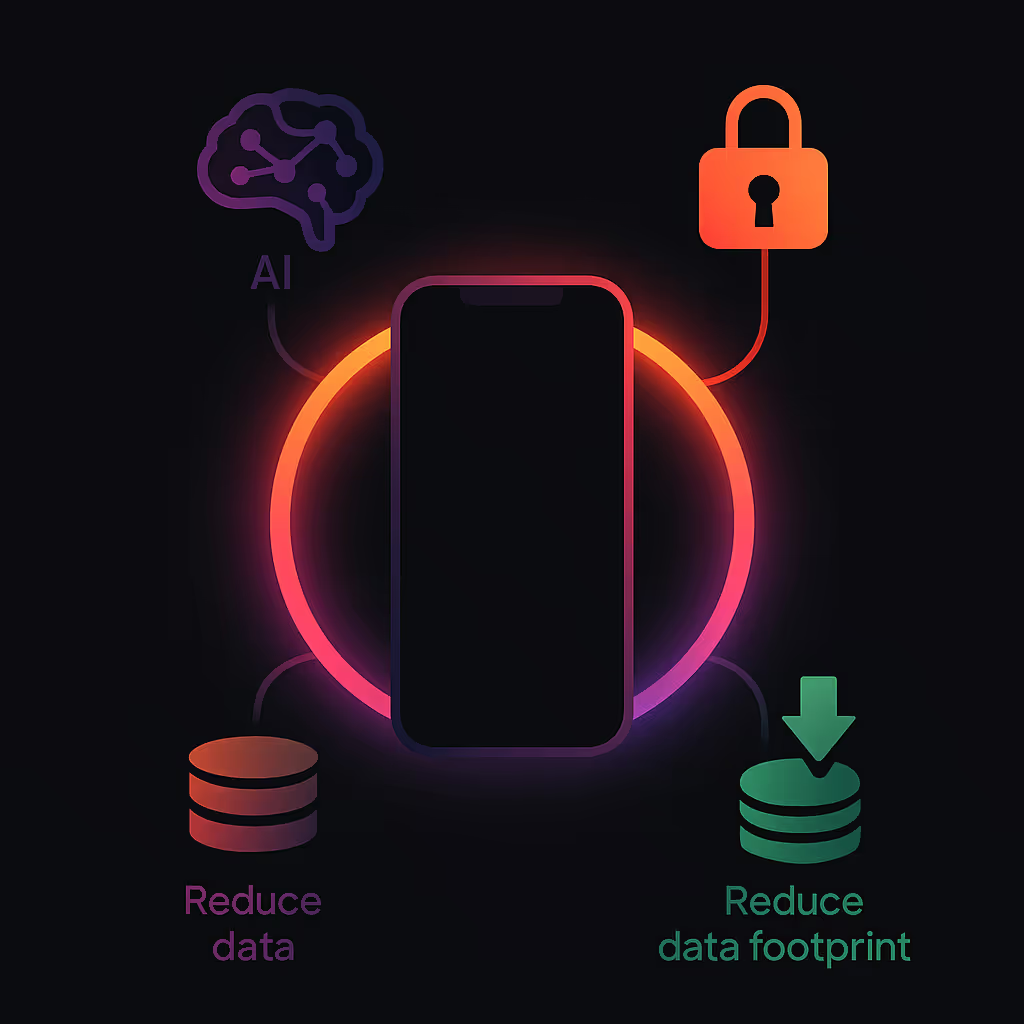
Emerging technologies are shifting security from reactive blocking to proactive verification.
Zero-Trust SMS Security
Zero trust employs a "never trust, always verify" policy. Instead of assuming messages from known contacts are safe, zero-trust frameworks treat every link as suspicious until verified. Gartner predicts that by 2026, 10% of large enterprises will have a mature zero-trust program in place, up from less than 1% today.
AI-Powered Detection
AI advancements such as natural language understanding and large language models enhance detection, helping identify suspicious requests, urgent tones, fake replies, and brand impersonation (Forrester).
With half of organizations having BYOD smartphone policies, mobile threat defense solutions are becoming essential. These tools analyze message content in real time rather than relying solely on outdated URL blocklists.
Multi-Vendor Security Environments
63% of director-level security leaders said their firm currently uses two or more vendors in its content security environment. Consolidating email, messaging, and collaboration security under unified platforms improves visibility and response times.
Proactive data reduction complements these emerging defenses. Even the best AI cannot protect you if attackers already have your phone number and personal history.
Key takeaway: Zero-trust messaging and AI detection are the future, but they work best when combined with a minimized data footprint.
Take Back Control of Your Inbox and Identity
Phishing texts will keep coming as long as your personal information circulates across data broker databases. Reactive blocking helps, but it cannot address the root cause.
To truly reduce smishing:
- Remove yourself from data broker sites using an automated service.
- Use aliases for email and phone to compartmentalize your contact points.
- Enable masked payments to limit financial exposure.
- Monitor continuously for data re-listings and dark web exposures.
Cloaked offers all of these capabilities in one platform, making it straightforward to shrink your digital footprint without juggling multiple tools. With data removal from 140+ brokers, unlimited aliases, $1 million identity theft insurance, and upcoming AI defense features, Cloaked provides comprehensive protection at an affordable price.
Stop playing defense. Start cutting the data supply chain that feeds scammers.





