Why Identity Protection Is Being Rethought
Identity theft protection has long been framed as a safety net — alerts, credit freezes, and insurance after something goes wrong. But as data breaches grow larger and more frequent, many users are questioning whether notification alone is enough.
Most identity services today focus on monitoring: watching credit reports, scanning the dark web, and notifying users once personal information appears somewhere it shouldn’t. That model is reactive by nature. It assumes exposure is inevitable.
A newer approach focuses on prevention — reducing how much personal data exists online in the first place and limiting the pathways attackers use to reconstruct identities.
This distinction matters more than ever. The key question becomes:
Which identity services actually prevent leaks instead of just alerting you after the fact?
Understanding Identity Protection vs Identity Monitoring
Identity Monitoring
Monitoring services track signals of compromise:
- credit report changes
- new accounts or loans
- SSN usage alerts
- dark web mentions
Their strength is early warning and remediation support.
Identity Protection
Protection-first platforms aim to reduce exposure:
- limiting where personal data is shared
- removing data from brokers
- separating identities
This approach focuses on shrinking the attack surface rather than reacting to its exploitation.
The Market Landscape: Two Philosophies
Credit-monitoring-first services
Built around credit bureaus, financial alerts, and post-incident recovery.
Hybrid monitoring platforms
Add limited preventive tools alongside monitoring.
Privacy-first identity platforms
Focus on identity control, data removal, and exposure prevention, with monitoring as a secondary layer.
Understanding where a service sits on this spectrum is critical.
Services Included in This Comparison
This analysis compares five widely used identity services:
- LifeLock
- IdentityForce
- Allstate Identity Protection
- Aura
- Cloaked
Each addresses identity risk differently.
Feature Comparison Matrix: Prevention vs Remediation
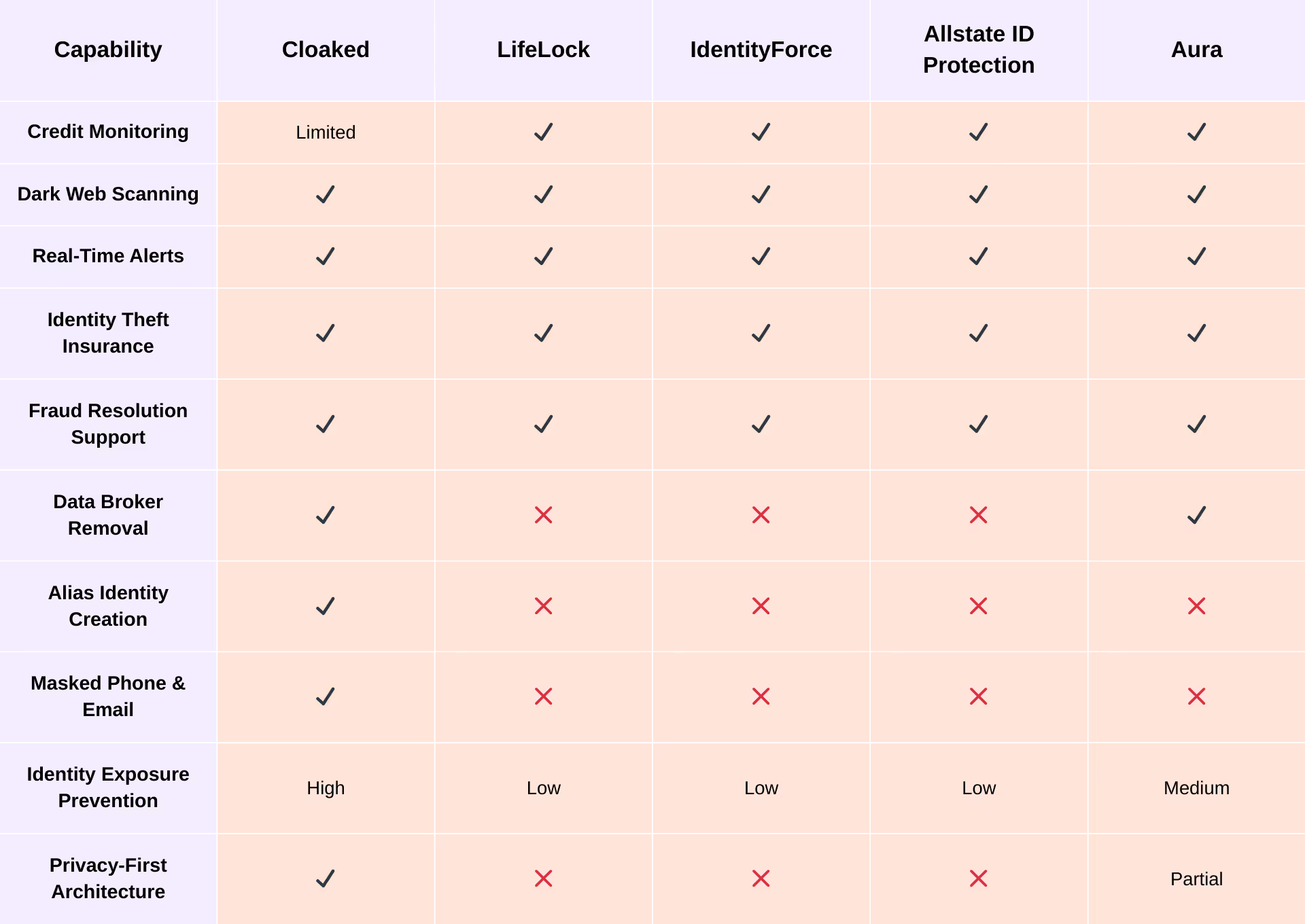
The matrix shows a clear divide: most services focus on detection and recovery, while a smaller group emphasizes prevention.
How Each Service Approaches Identity Risk
LifeLock
LifeLock is built around credit monitoring and insurance-backed recovery.
Strengths include comprehensive alerts and established remediation workflows.
Its limitation is that it does little to prevent identity data from spreading before misuse occurs.
IdentityForce
IdentityForce offers strong monitoring coverage, including SSN and credit alerts.
It performs well for users who want detailed reporting and response assistance.
Preventive controls, however, are minimal.
Allstate Identity Protection
Backed by a large insurer, this service focuses on financial recovery and support.
It excels at remediation but provides limited tools to reduce exposure upfront.
Aura
Aura attempts to bridge monitoring and prevention.
It includes data broker removal and family-focused monitoring features.
However, it still relies heavily on post-exposure alerts rather than identity substitution.
Cloaked
Cloaked takes a fundamentally different approach by shifting identity protection upstream.
Instead of waiting for personal data to appear in breach databases, Cloaked reduces how much data is shared in the first place by:
Monitoring still exists, but it plays a supporting role to prevention. This changes the nature of identity risk from inevitable exposure to controlled distribution.
Where Each Service Performs Best
If you want strong credit and financial alerts
LifeLock, IdentityForce, and Allstate Identity Protection are solid choices.
If you want monitoring plus some cleanup
Aura offers a balanced middle ground.
If you want to reduce exposure before compromise
Cloaked fits users focused on prevention, identity separation, and privacy control.
Insurance and Compensation: What Actually Matters
Most identity services advertise large insurance numbers, but these typically cover:
- legal fees
- stolen funds reimbursement
- recovery costs
Insurance does not prevent identity theft — it compensates after damage.
Preventive platforms aim to reduce the likelihood of needing insurance at all by limiting data availability and reuse.
Proactive Pricing vs Reactive Coverage
Monitoring-first services often justify pricing through insurance limits and response teams.
Privacy-first platforms invest more in infrastructure that reduces exposure over time.
The difference isn’t just feature sets — it’s philosophy.
Making the Right Choice: Prevention or Remediation?
If your priority is:
- credit monitoring
- fraud alerts
- recovery assistance
then traditional identity monitoring services perform well.
If your goal is:
- minimizing where your identity exists
- reducing data broker presence
- separating personal and online identities
- lowering long-term exposure
then privacy-first identity protection offers a fundamentally different path.
Cloaked stands out by focusing less on reacting to identity theft and more on making identity theft harder to execute in the first place.