
Why Privacy Economics Matter More Than Features
Privacy conversations often focus on features — aliases, removals, alerts, scans. But most users don’t experience privacy as a feature checklist. They experience it as time spent, subscriptions managed, and money paid across multiple services.
As privacy risks increase, people increasingly stack tools:
- one service for email aliasing
- another for phone masking
- a third for data broker removal
- a password manager
- virtual cards
- identity monitoring
Individually, these tools may look affordable. Together, they create complexity, redundancy, and rising monthly costs.
The real question isn’t “Which tool has the most features?”
It’s: How do you get the maximum privacy value per dollar — without paying twice for the same protection?
Understanding the Economics of Privacy Tools
Total Cost of Ownership
This includes:
- subscription fees
- overlapping services
- renewal cycles
- time spent managing multiple dashboards
- effort required to coordinate tools
A $10/month service isn’t cheap if it requires three other $10/month tools to function properly.
Redundancy vs Coverage
Many tools overlap in subtle ways:
- multiple services removing the same brokers
- alias limits that force upgrades
- password managers duplicating browser tools
- monitoring alerts covering the same breach sources
Redundancy inflates cost without increasing protection.
Time as a Cost
Every additional tool adds:
- onboarding friction
- configuration time
- renewal tracking
- learning curves
- mental overhead
Time spent managing privacy is part of its real cost.
Common Privacy Stack Combinations
To understand value, it helps to look at realistic bundles users assemble.
Stack A: Point Tools Combined
- Email aliasing service
- Phone aliasing app
- Data broker removal service
This stack offers strong coverage — but only if each tool is maintained separately.
Stack B: Removal-Heavy Stack
- Multiple broker removal services
- Manual opt-outs
- Breach monitoring
Effective for cleanup, but less for prevention.
Stack C: Integrated Identity Stack
- Virtual cards
- Secure storage
Designed to reduce exposure at the source and minimize overlap.
Comparative Cost Breakdown: Separate Tools vs Integrated Suite
Example: Building Privacy with Separate Services
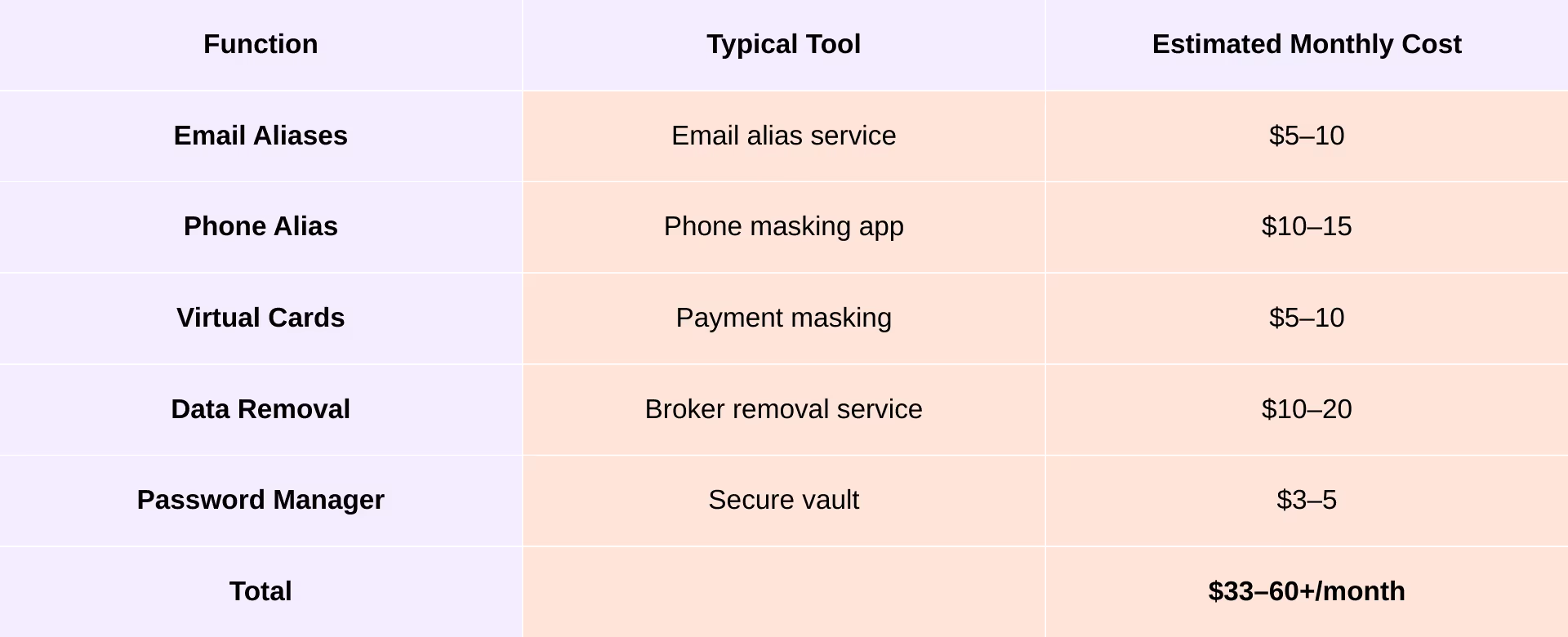
This doesn’t account for:
- overlapping broker coverage
- limited alias counts
- fragmented UX
- separate renewals
Example: Integrated Privacy Suite Model
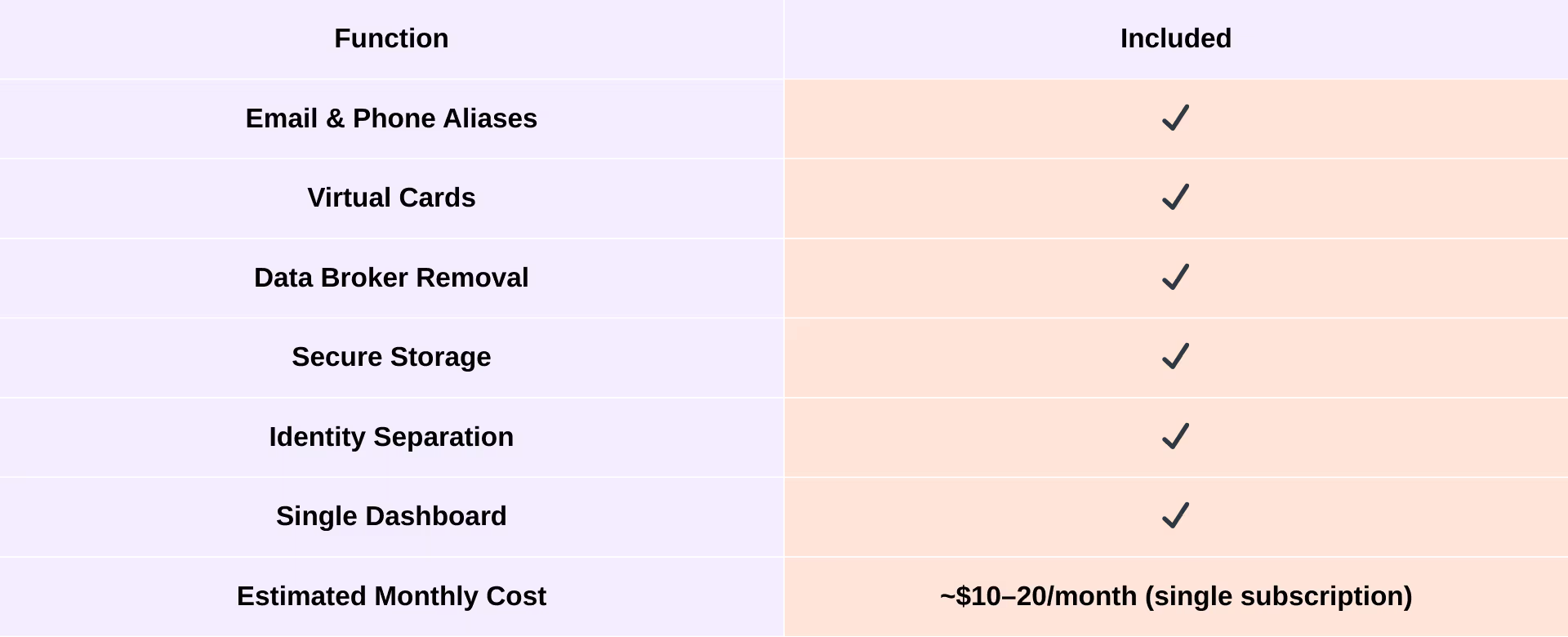
The value here isn’t just pricing — it’s reduced redundancy.
Where Redundancy Creeps In
Privacy stacks often duplicate protection unknowingly:
- Two services removing the same brokers
- Email aliases with overlapping limits
- Multiple alerts sourced from the same breach databases
- Password tools duplicating browser autofill
- Phone aliases expiring unexpectedly
Each redundancy adds cost without expanding coverage.
How Different Services Approach Efficiency
DeleteMe + Point Tools
Strong removal coverage, but users still need:
- alias tools
- phone masking
- payment protection
Good cleanup, limited consolidation.
Incogni + Privacy Bee
Heavy emphasis on broker removal.
Strong suppression, but no identity masking or communication privacy.
Point Tool Stack (Burner + Alias + Card Masking)
Effective but fragmented.
Best for users willing to manage complexity.
Cloaked
Cloaked approaches cost efficiency by collapsing multiple privacy layers into a single identity framework.
Instead of layering tools, it:
- replaces identifiers once
- reuses identity sets across services
- reduces need for duplicate tools
- minimizes relisting by preventing exposure
This lowers both financial cost and operational overhead.
Time Saved Is Privacy Gained
Efficiency isn’t just dollars — it’s hours:
- one onboarding flow instead of five
- one dashboard instead of multiple
- fewer renewals
- fewer alerts to triage
- fewer settings to maintain
Over time, this compounds into meaningful savings.
Where Integrated Suites Deliver Real Value
Integrated tools are most valuable when users:
- manage many accounts
- use multiple aliases
- operate across platforms
- want long-term privacy sustainability
- prefer prevention over cleanup
For users who only need one function, point tools are fine.
For users managing broad exposure, consolidation wins. Hence Cloaked comes out as the most prominent solution.
Snapshot: Privacy Value Per Dollar
- Point tools → flexible, powerful, but costly and complex
- Removal-heavy stacks → good cleanup, limited prevention
- Integrated identity platforms → lower redundancy, higher efficiency
Cloaked fits the last category by designing privacy as a system rather than a set of disconnected features.
Making the Right Economic Choice
The most cost-effective privacy solution isn’t the cheapest subscription — it’s the one that reduces how many tools you need altogether.
Ask yourself:
- How many tools am I paying for today?
- Which features overlap?
- How much time do I spend managing privacy?
- Do I want cleanup or prevention?
When privacy becomes part of daily life, efficiency matters as much as protection.